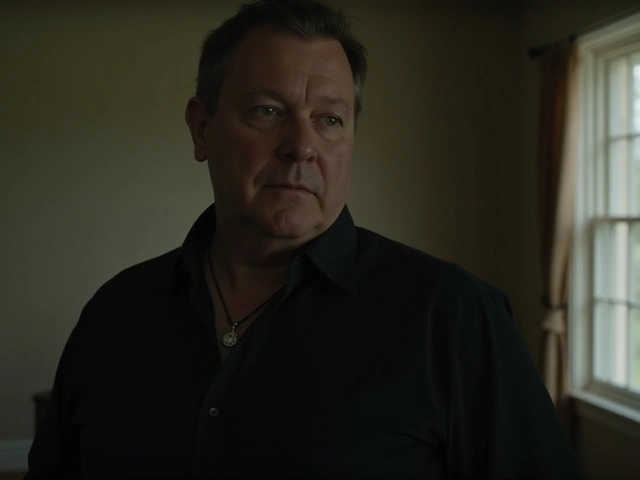

When Daniel Etim Effiong, Nollywood actor and filmmaker, sat down for a candid conversation in May 2024, he didn’t just talk about his latest film roles. He opened a wound from his childhood that had been sealed shut for decades. The revelation? His father was arrested, tried by a military tribunal, and sentenced to death for an alleged coup plot against Nigeria’s military government.
The disclosure came during an episode of WithChude, the popular interview show hosted by media personality Chude Jideonwo. It’s the kind of story that doesn’t just make headlines; it forces a nation to look back at its own turbulent history through the eyes of a family that lived it.
A Childhood Shattered by Military Rule
Here’s the thing: we often hear about political upheavals in broad strokes—dates on calendars, names of generals, shifts in power. But rarely do we hear about the dinner tables left empty or the children who grew up wondering if their father would ever come home.
Etim Effiong described the suddenness of it all. His father, Inyang Effiong, was a respected engineer and staff member at the Nigerian National Petroleum Corporation (NNPC). One day, security operatives arrived. There was no warning. No explanation given to the family at the door. Just the abrupt disappearance of a husband and father.
"My father was arrested and sentenced to death over an alleged coup plot," Etim Effiong told Jideonwo. The words were simple, but the weight behind them was crushing. The trial took place under the shadow of military rule, specifically during the regime of General Muhammadu Buhari, which lasted from December 1983 to August 1985. During this period, special military tribunals were established to try those accused of subversion or plotting against the state. Due process, as we understand it today, was largely absent.
The Silence After the Sentence
The details of the specific charges remain vague, even now. Etim Effiong did not provide exact dates for the arrest or the sentencing, noting that these events occurred when he was still a child. What he did emphasize was the aftermath. A death sentence is not just a legal verdict; it’s a social stigma that ripples outward.
His mother was left to navigate a hostile environment alone. Neighbors whispered. Friends distanced themselves. The fear wasn’t just that her husband might be executed—it was that the family itself was tainted by association with treason. "The experience shaped my childhood," the actor reflected. "It affected my sense of security and stability."
This wasn’t an isolated incident. Throughout the 1980s and early 1990s, Nigeria saw multiple coups and counter-coups. Under Decree No. 3 of 1984, military tribunals had sweeping powers to detain and sentence individuals without standard judicial safeguards. Hundreds of Nigerians faced similar fates, though few public figures have spoken so openly about their personal connection to these trials.
From Prisoner to Pastor
But wait—the story doesn’t end in a grave. Despite the death sentence handed down by the military court, Inyang Effiong was never executed. The specifics of his release are unclear. Was it a commutation? A pardon? Or perhaps the annulment of the judgment following a change in government?
Etim Effiong noted that his father eventually regained his freedom, but the trauma lingered. Rather than returning to his engineering career at NNPC, Inyang Effiong turned to faith. He became a pastor, finding solace and purpose in religious ministry. This transition, according to his son, deeply influenced Etim Effiong’s own worldview and values.
"He later became a pastor," Etim Effiong shared. The shift from a high-profile corporate job to spiritual leadership underscores the profound personal cost of political repression. It’s a reminder that survival often requires reinvention.
Why This Matters Now
So why bring this up in 2024? Because memory matters. In a country still grappling with the legacy of its military past, stories like Etim Effiong’s humanize historical statistics. They remind us that behind every decree and every tribunal were real families, real fears, and real losses.
The interview has sparked conversations on social media, with many Nigerians sharing their own family histories tied to the era. It also highlights the role of entertainment figures in preserving oral history. Etim Effiong isn’t just an actor; he’s a witness to a chapter of Nigerian history that is often overlooked in official narratives.
There has been no official response from the Nigerian government, the military, or NNPC regarding these claims. Nor have any new legal proceedings been initiated. But the act of speaking out itself is significant. It breaks the silence that often surrounds victims of state repression.
Frequently Asked Questions
Who is Daniel Etim Effiong?
Daniel Etim Effiong is a prominent Nigerian actor and filmmaker known for his work in Nollywood. He gained widespread recognition for roles in various films and television series. Beyond his acting career, he has become a voice for discussing personal and historical issues affecting Nigerian families.
What happened to Inyang Effiong?
Inyang Effiong, former staff of the Nigerian National Petroleum Corporation, was arrested and sentenced to death by a military tribunal in the mid-1980s for an alleged coup plot against the military government led by General Muhammadu Buhari. Although sentenced to death, he was eventually released and later became a pastor.
When did this interview take place?
The interview where Daniel Etim Effiong revealed his father’s story was published in May 2024 on the YouTube channel of the talk show “WithChude,” hosted by Chude Jideonwo. Clips and discussions of the interview circulated widely on social media platforms like Instagram in June 2024.
Was the death sentence carried out?
No, the death sentence was not carried out. While Daniel Etim Effiong confirmed that his father was formally sentenced to death by a military tribunal, he clarified that Inyang Effiong was eventually released. The exact legal mechanism for his release, such as a pardon or commutation, was not specified in the interview.
How did this affect the Etim Effiong family?
The arrest and sentencing caused severe emotional and social strain. Daniel Etim Effiong described growing up with fear and uncertainty. His mother faced social stigma and had to manage the household alone amid suspicion from the community. The experience profoundly shaped the actor’s childhood and perspective on security and justice.
What is the context of military tribunals in Nigeria in the 1980s?
During the military regimes of the 1980s, particularly under General Muhammadu Buhari (1983–1985) and General Ibrahim Babangida (1985–1993), special military tribunals were used to try cases of alleged treason and coup plots. These courts operated with limited due process, and death sentences were common for those convicted of subversion against the ruling junta.