
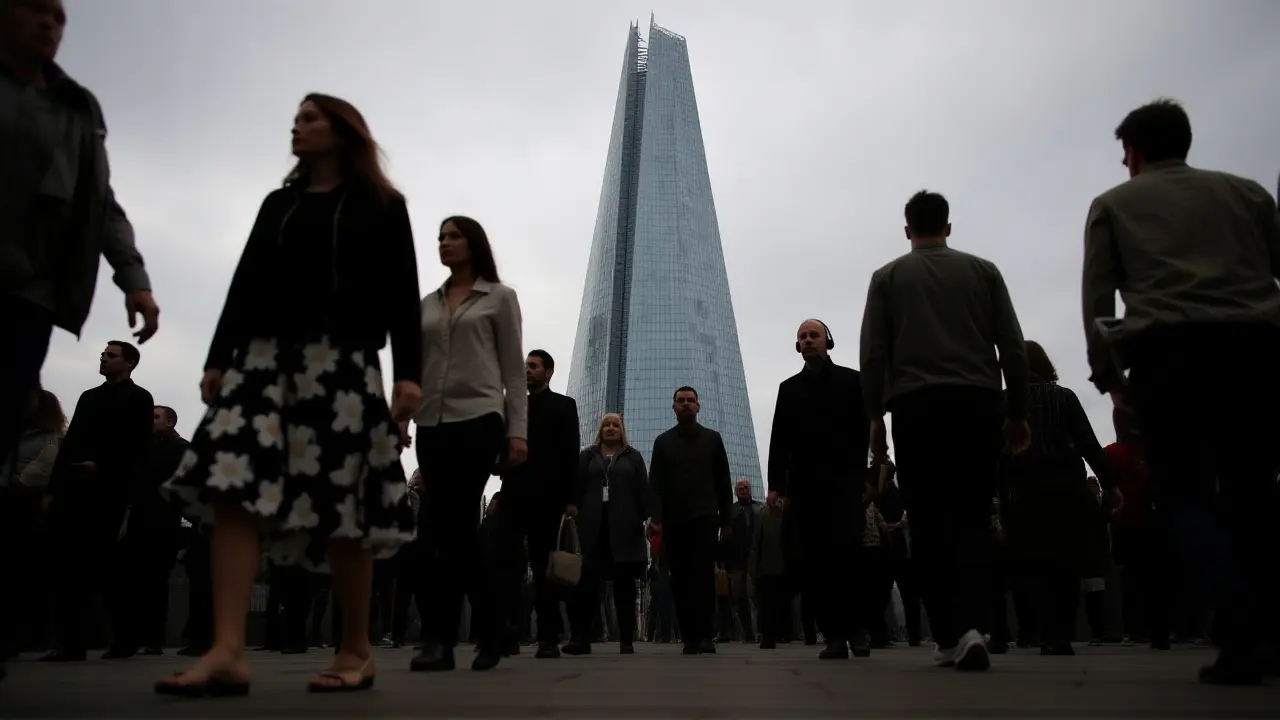
The United Kingdom just threw a curveball at economists. In a surprising shift, the unemployment rate tumbled to 4.9% in February 2026, a figure that didn't just beat analyst predictions—it blew right past them. This represents a sharp 0.3 percentage point drop from the 5.2% mark seen over the previous three months, signaling a labor market that's far more stubborn and resilient than anyone expected.
Here's the thing: most analysts were bracing for a stalemate. The consensus forecast, widely cited by financial hubs, predicted the rate would hold steady at 5.2%. When the data hit the wires on April 21, 2026, the reaction was immediate. Financial news outlets like The Times and FXStreet both highlighted the discrepancy, noting that the result came in "well below" what the markets had priced in.
- Actual Unemployment Rate: 4.9%
- Expected Rate: 5.2%
- Net Change: -0.3 percentage points
- Report Date: April 21, 2026
- Market Sentiment: Strong positive surprise
Why the Labor Market is Defying Gravity
It's easy to look at a 0.3% drop and think it's just a rounding error. But in the world of macroeconomics, that's a significant swing. This jump in employment suggests that businesses aren't just holding onto staff—they're actively hiring. Turns out, the British economy is finding a way to create jobs even as other global markets struggle with stagnation.
The timing is interesting. By February 2026, many expected the lag effect of previous interest rate hikes to finally bite into payrolls. Instead, we're seeing a weirdly durable job market. This kind of resilience usually points to one of two things: either the economy is fundamentally stronger than the data suggests, or there's a persistent shortage of workers that's forcing companies to keep their doors open and their hiring pipelines active.
Interestingly, the "beat" against expectations is the real story here. When FXStreet reported the data at 06:01 UTC on April 21, the narrative wasn't just about the number, but about the failure of the analysts to predict the trend. It shows a gap between theoretical economic modeling and the actual grit of the UK high street.
Mixed Reactions from the City and the Street
Not everyone is popping champagne, though. While low unemployment is generally a win for the worker, it creates a headache for the Bank of England. A "tight" labor market—where there are more jobs than available people—often leads to wage inflation. If companies have to fight over a shrinking pool of talent, they raise pay, which can keep inflation higher for longer.
On the flip side, for the average person in London or Manchester, this is great news. More jobs mean more security and better bargaining power. One analyst noted that this resilience suggests a "hidden strength" in the service sector, which has historically been the backbone of the UK's recovery efforts.
But wait, there's a catch. We have to wonder if these are high-quality, full-time roles or a surge in precarious gig-economy work. The raw percentage tells us people are employed, but it doesn't tell us if they're thriving or just surviving. The details on underemployment are still unclear, leaving a question mark over the actual quality of this growth.
The Ripple Effect on the UK Economy
The broader impact of this 4.9% figure is a shifted perception of risk. For investors, a stronger-than-expected labor market makes the UK look like a safer bet for capital injection. It suggests that consumer spending—which is driven by paychecks—will likely remain steady or even grow through the second quarter of 2026.
Oddly enough, this could lead to a paradoxical situation where the government feels less pressure to implement aggressive stimulus packages. If the private sector is doing the heavy lifting of job creation, the state might lean back, focusing more on austerity or debt reduction rather than job schemes.
What's Next for the 2026 Forecast?
All eyes are now on the next quarterly release. If the rate continues to slide, we might be looking at a total structural shift in the UK workforce. The big question is whether this is a temporary seasonal fluke or a genuine trend of economic expansion.
Watch for the upcoming inflation data. If the 4.9% unemployment rate is paired with rising prices, expect the central bank to keep the pressure on interest rates. If, however, we see growth without inflation (the "goldilocks" scenario), the UK could be entering a period of genuine prosperity.
Historical Context: The Road to February 2026
To understand why 4.9% is such a shock, we have to look back at the volatility of the early 2020s. The UK market has spent years swinging between pandemic-era furloughs and the post-Brexit labor shortages. For a long time, the narrative was one of "crisis management." Moving toward a sub-5% unemployment rate feels like a return to a semblance of normalcy.
Compared to the spikes seen during previous economic downturns, this current stability is a welcome change. It echoes the resilience seen in the late 90s, though the current economy is far more digitized and fragmented. The fact that we've hit this number in early 2026 suggests that the "long recovery" might finally be reaching its conclusion.
Frequently Asked Questions
Why is a 4.9% unemployment rate considered a "beat"?
It's considered a beat because market analysts and economists had forecasted the rate to remain stagnant at 5.2%. In financial terms, when the actual data is significantly better (lower unemployment) than the consensus prediction, it's a "surprise" that often triggers positive market reactions and shifts economic forecasts.
Who reported these figures on April 21, 2026?
The data was prominently reported by major financial and general news outlets, specifically The Times and FXStreet. These organizations analyzed the labor market data to highlight the 0.3 percentage point drop from the previous three-month average.
How does low unemployment affect inflation in the UK?
Low unemployment typically creates a "tight" labor market. This means employers must compete for a limited number of workers by offering higher wages. While great for employees, these higher wages can lead to "wage-push inflation," where companies raise prices to cover their increased labor costs, potentially complicating the Bank of England's mission to keep inflation low.
What was the previous unemployment rate before the February drop?
Prior to the February 2026 measurement, the unemployment rate stood at 5.2% for the previous three-month period. The move to 4.9% represents a decrease of 0.3 percentage points, indicating a stronger-than-expected recovery in job creation.




Absolute joke that people are celebrateing this. It's obviously just more zero-hour contracts and fake stats to make the govt look gud. These numbers are totally cooked and everyone knows it
The data suggests a strong recovery but we really need to look at the underemployment metrics 📊. If these are just part-time roles it doesn't actually help the average household budget much 📉
Typical greed. companies just hire cheap labor to bloat their numbers while real people suffer in the mud. it is a moral failure of the system honestly
The ontological tension here lies in the dichotomy between aggregate quantitative metrics and the lived phenomenological experience of the precariat. We are witnessing a systemic decoupling where the macroeconomic indicators suggest a Pareto improvement, yet the underlying socio-economic stratigraphy remains fragmented. This resilience is likely an artifact of structural hysteresis within the labor market, where the equilibrium point has shifted due to exogenous shocks. The propensity for wage-push inflation is not merely a central bank headache but a manifestation of the inherent contradiction in late-stage fiscal consolidation. One must interrogate whether this is a genuine recovery of productive capacity or merely a stochastic fluctuation in a volatile regime. The heuristic being used by these analysts is fundamentally flawed because it ignores the asymmetric information present in gig-economy labor contracts. We are seeing a shift in the labor-leisure trade-off that transcends simple percentages. Ultimately, the systemic volatility of the early 2020s has created a new baseline of precariousness that defies traditional econometric modeling. This is a classic case of the map not being the territory, where the 4.9% figure serves as a convenient fiction for institutional stability.
interesting point about the service sector actually it usually leads the way in these cycles and the resilience is probably coming from hospitality and healthcare
Totally agree with the focus on the service sector! It's such a huge part of the GDP and seeing that synergy between demand and labor is a great sign for the macro-environment ✨. Let's hope this translates to real wage growth for the workers! 😊
I think everyone just wants a bit of stability right now regardless of the percentages <3
Pretty wild to see the analysts get it so wrong. Makes you wonder if the models they use are just out of touch with how people actually find jobs these days.
it just feels like the news always blows these things out of proportion until you actually see your paystub
It is indeed a complex situation and one must remain patient while the data matures