
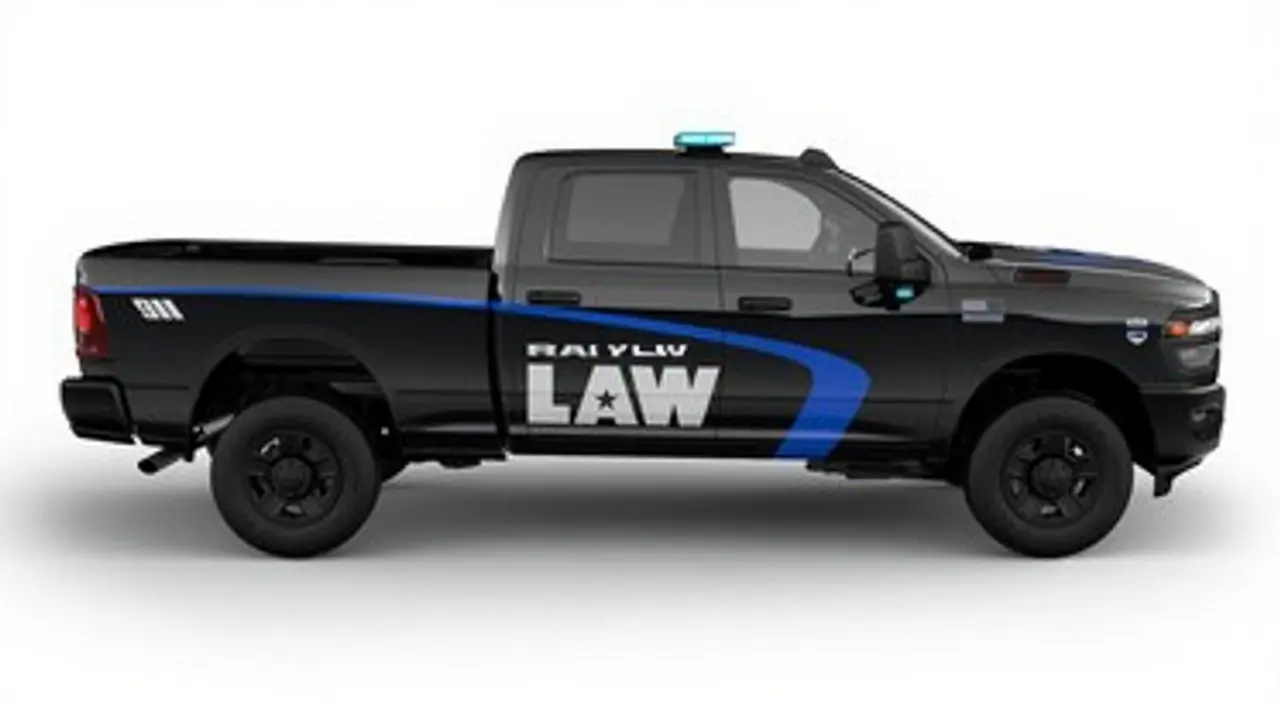
Law enforcement agencies just got a massive upgrade in firepower and agility. Stellantis has officially unveiled the 2027 Ram 2500 Emergency Response Vehicle, marking the first time a 3/4-ton heavy-duty truck has ever been certified as pursuit-capable. Announced on April 13, 2026, this isn't just another work truck with a siren on top; it's a specialized tool designed for the brutal demands of rural and mountainous patrol where a standard sedan or SUV simply can't survive. By merging heavy-duty towing capacity with high-speed pursuit hardware, Ram is filling a gap in the market that has left agencies compromising between capability and speed for decades.
Here's the thing: most heavy-duty trucks are built for hauling, not chasing. They're usually too heavy or too slow to be considered "pursuit-rated," which means they aren't certified for the high-stress, high-speed maneuvers required in police chases. But the 2027 Ram 2500 ERV changes that. It's specifically tailored for government agencies operating in mixed-terrain regions where the road might end and the dirt begins, yet the need for speed remains.
Engineered for the Chase: The Technical Breakdown
Under the hood, the truck isn't playing around. It's powered by a 6.4-liter HEMI V-8 engine that puts out 405 horsepower and 429 lb-ft of torque. While those numbers might seem standard for a big truck, the magic is in the tuning. This specific powertrain was engineered to hit the strict acceleration requirements set by the Michigan State Police, the gold standard for law enforcement vehicle testing.
To get that power to the ground, Ram swapped the standard 3.73 axle ratio for an uprated 4.10 ratio. This change gives the truck a much punchier start, allowing it to get up to speed faster than a typical 2500. Pair that with a TorqueFlite HD eight-speed automatic transmission and an anti-spin differential, and you've got a beast that can actually handle. According to reports from Road and Track, the ERV hits a top speed of 103 mph. It's not a race car, but for a 3/4-ton truck, it's a serious leap forward.
The interior is where the practicalities of police work really shine. The engineering team moved the gear shifter to the column, which might seem like a small detail, but it opens up a huge amount of room on the center console. This is critical for mounting the laptops, radios, and sirens that often clutter a patrol vehicle's cabin. It's a clear nod to the people who actually spend 12 hours a day inside these trucks.
Proving Ground: The Grattan Raceway Trials
You can't just call a truck "pursuit-capable" because it has a V-8; you have to prove it. The 2027 Ram 2500 ERV was put through the ringer at Grattan Raceway during the rigorous Michigan State Police trials. This isn't a leisurely drive—it's a series of high-G turns, rapid acceleration, and sudden braking designed to break a vehicle.
Surprisingly, the Ram didn't just pass; it excelled. After completing a grueling 40-lap test, the ERV showed significantly better tire wear than its competitors. In the world of fleet management, this is a huge win. If a truck can handle extreme duty conditions without shredding its tires or overheating its brakes, it means less downtime and lower maintenance costs for the municipality.
During the reveal, Tim Kuniskis, Head of American Brands at Stellantis, emphasized the stakes of this development. "When your job means running toward danger, not away from it, you don't have time to second-guess your equipment," Kuniskis stated. His point was simple: reliability in the field is a matter of officer safety.
The Competitive Landscape and Market Gap
For years, law enforcement has had to choose between the agility of a Dodge Durango Pursuit or the raw power of a Special Service Vehicle (SSV). The ERV bridges that gap. Interestingly, this move puts Stellantis in a dominant position in the heavy-duty pursuit market. According to analysis from Ford Authority, there is currently no pursuit-capable alternative in the Ford Super Duty lineup that matches these certifications.
This gives Ram a significant edge when bidding for government contracts, particularly in states with mountainous terrain like Colorado or West Virginia. When an agency needs to haul heavy gear into a remote area but still needs the ability to pursue a suspect at 100 mph, there's now only one viable choice on the market.
- Top Speed: 103 mph
- Engine: 6.4L HEMI V-8 (405 hp / 429 lb-ft torque)
- Axle Ratio: 4.10 (Uprated from standard 3.73)
- Availability: Second half of 2026
- Certification: First 3/4-ton truck to pass Michigan State Police trials
What's Next for Fleet Operators?
The 2027 Ram 2500 ERV is slated to hit fleets in the second half of 2026. While pricing remains a mystery for now, the cost will likely reflect the specialized suspension and drivetrain upgrades required for pursuit certification. Agencies will likely be looking at this as a replacement for older, non-certified heavy-duty trucks that struggle with stability during emergency responses.
Looking ahead, the success of this vehicle might push other manufacturers to finally certify their heavy-duty pickups for pursuit duty. Until then, Ram holds the keys to the only 3/4-ton truck that can legally and safely be used in a high-speed chase. It's a bold move that turns a utility vehicle into a tactical asset.
Frequently Asked Questions
What exactly does "pursuit-capable" mean for a truck?
A pursuit-capable rating means the vehicle has undergone rigorous testing (like the Michigan State Police trials) to ensure it can handle high-speed maneuvers, rapid acceleration, and heavy braking without mechanical failure. It involves uprated brakes, cooling systems, and suspension that can handle the lateral forces of a high-speed chase, which standard work trucks aren't built for.
How does the 4.10 axle ratio help law enforcement?
The 4.10 axle ratio is "shorter" than the standard 3.73 ratio found in most Ram 2500s. This provides a mechanical advantage that increases torque at the wheels, resulting in faster acceleration from a standstill. For police officers, this means the truck can reach cruising or pursuit speeds more quickly, which is essential in emergency response scenarios.
When can agencies actually start ordering these vehicles?
The 2027 Ram 2500 Emergency Response Vehicle is expected to be available to government and law enforcement fleets starting in the second half of 2026. While exact order dates aren't public, fleet procurement usually begins several months before the delivery window to allow for custom equipment installation.
Does this truck replace the Ram Special Service Vehicle (SSV)?
Not necessarily. The ERV is built upon the foundation of the Special Service Vehicle, but it adds a layer of performance and certification that the SSV lacks. While the SSV is great for general utility and towing, the ERV is specifically for agencies that need the added capability of pursuit-rated dynamics in a heavy-duty package.




that 4.10 axle ratio is the real winner here since it helps a lot with the off the line acceleration for a heavy rig like this
Who cares about a 103 mph top speed lol that is barely faster than a soccer mom in a minivan. Totaly useless for actual high speed chases on the interstate
absolutly ridiculuos to spend tax payer money on these monsters when we need better public transit its just a tool for intimidashun
The ontological shift from a utilitarian work-horse to a pursuit-rated kinetic instrument represents a fascinating intersection of mechanical pragmatism and institutional necessity. By optimizing the powertrain for high-G maneuvers, Stellantis is essentially redefining the operational parameters of the heavy-duty chassis. It's an exercise in overcoming the inherent inertia of a 3/4-ton frame to achieve a state of tactical agility that was previously deemed theoretically impossible within this specific vehicle class.
Moving the shifter to the column is such a smart move for the interior layout! 👏 More room for the gear is always better for the officers 🚔✨
durango is way better and thiz truck is just a waste of steel lol think itll overheat the moment it hits 90 mph
Why do we keep fueling this arms race of police equipment? 🙄 It's just more power for the state to flex on citizens while the actual infrastructure of our towns is crumbling. This is just a bigger hammer for a problem that needs a scalpel. Seriously, who is actually benefiting here besides the shareholders at Stellantis? :/
The ergonomics of moving that shifter are a total game changer for the cabin workflow! 😊 It really helps with the cognitive load when you're managing a high-stress environment with so much gear in the cockpit. Such a great way to support the folks on the front lines! 🌟
I think it's great that they are finding ways to make the officers safer in rural areas! 😊
hope the breakin system is actualy better since stoping a truck that size at 100 is the real challenge
This is going to be huge for the agencies in the Appalachians or the Rockies where the roads are basically just suggestions anyway
A very practical addition for those in need of heavy towing and speed.
Pretty wild to see a 2500 handle those MSP trials without shredding the tires
This thing looks like an absolute beast! 🔥 Can't wait to see it in action on the roads! 🚀💪
The 40-lap test is the most impressive part for me tbh :)
Ford is going to have to step up their game now because this is a total knockout in the HD pursuit space!
It is commendable that the focus remains on officer safety during these high stress operations